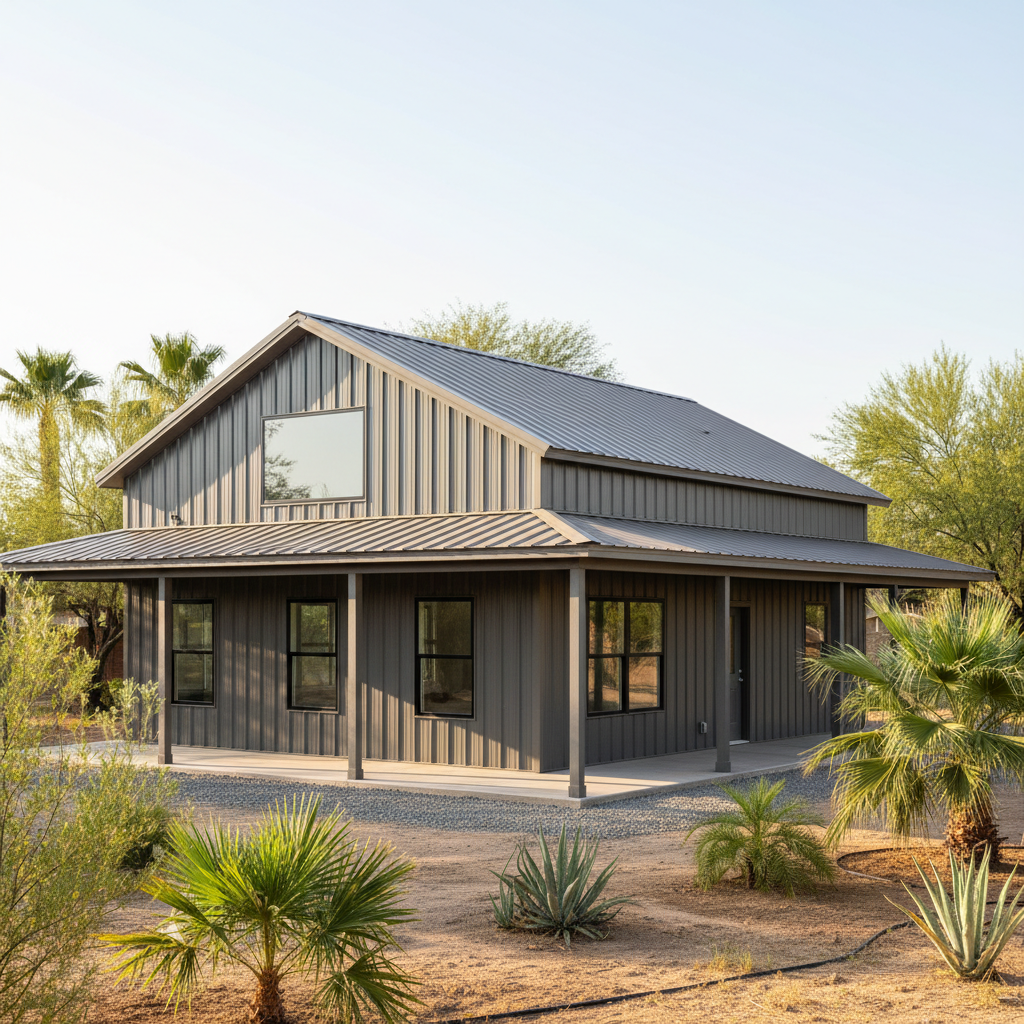
So, How Much Does a Barndominium Cost in Glendale?
Alright, let's just cut to the chase. You're probably looking at a barndominium because you like how they look, how tough they are, or maybe you just want something different from all the stucco boxes you see around Glendale. Good call! But the first thing everyone wants to know is, "What's this thing actually going to cost me?"
Look, I can't give you one magic number – every project is different. It's kind of like asking how much a car costs; are we talking about a beat-up sedan or a shiny new luxury SUV? What I *can* do, though, is give you some solid price ranges and explain what makes those numbers jump up or down. For a finished, ready-to-live-in barndominium right here in Glendale, you're generally looking at anywhere from $120 to $200+ per square foot. That covers everything, from the ground up to the final touches. If you're just thinking about the metal shell itself, that's a whole different ballgame – much less, maybe $20-$40 per square foot for the kit and getting it put up. But remember, that's just the very beginning.
What Makes the Price Go Up or Down?
A lot of things factor into that per-square-foot cost. It's not just the steel, you know?
- Size and Complexity: This one's a no-brainer. A simple, rectangular 1,500 sq ft building will be way cheaper than a 3,000 sq ft multi-story place with lots of bump-outs and fancy rooflines. More corners, more angles, more work, more materials – it all adds up.
- Foundation: We're in Glendale, so you're almost certainly going to need a concrete slab. The cost here really depends on the soil. Sometimes we hit caliche that needs extra work, or if your lot slopes, you might need more extensive grading or a thicker slab to make it right. A basic 4-inch slab with footings runs a few bucks a square foot, but if you need a post-tension slab because of expansive soils, that'll definitely add to the bill.
- Shell Materials: Most barndominiums use a pre-engineered metal building kit. The gauge of steel, the kind of roof (standing seam costs more than screw-down R-panel but lasts longer, in my experience), and the wall panels all play a part in the final price.
- Insulation: This is HUGE, especially here in Glendale. You absolutely cannot skimp on this. Spray foam gives you the best energy efficiency, but it's pricier upfront than batt insulation. Trust me, you'll be thanking yourself during our 115-degree summers for investing in good insulation. It really does pay for itself in lower AC bills.
- Interior Finishes: This is where you have the most control over your budget. Are you thinking basic drywall, laminate flooring, and builder-grade cabinets? Or are we talking custom cabinetry, granite countertops, tile showers, and high-end fixtures? This part alone can swing the cost by $30-$80+ per square foot, easily.
- Utilities & Site Work: Getting water, sewer (or septic), and electricity to your building site. If you're starting with raw land, this can be a pretty big expense. Trenching, hookup fees, permits – it all adds up.
- Permits & Fees: Don't forget, the city of Glendale isn't doing this for free. Plan for several thousand dollars for permits, impact fees, and inspections.
What Should a Quote Include?
When you get a quote from a contractor, especially someone like us at Glendale Metal Buildings, you want a clear breakdown. Don't just settle for a single number. A good quote should itemize:
- Site Preparation: Clearing, grading, compaction.
- Foundation: Concrete slab, rebar, vapor barrier, footings.
- Metal Building Kit: Cost of the steel structure, framing, roof, and wall panels.
- Erection: The labor to get that steel shell standing.
- Exterior Finishes: Doors, windows, exterior trim, any wainscoting or stone accents.
- Rough-ins: Plumbing, electrical, HVAC ductwork.
- Insulation: What kind, and what's its R-value.
- Interior Framing: Wood or metal studs for your inside walls.
- Drywall & Paint: Installation and finishing.
- Flooring: Materials and installation.
- Cabinetry & Countertops: Materials and installation.
- Fixtures: Lighting, plumbing fixtures, appliances (sometimes included, sometimes not).
- Permits & Engineering: All the necessary fees and structural plans.
- Project Management: The contractor's overhead and profit.
If a quote just says "Barndominium: $X," honestly, you should probably walk away. You really need to know what you're paying for.
How to Avoid Overpaying for Your Barndominium
Nobody wants to get ripped off. Here's how to keep your costs in check without sacrificing quality:
- Get Multiple Bids: This is absolutely fundamental. Get at least three detailed quotes from reputable contractors. It helps you understand the going rate and spot any bids that are way out of line.
- Be Specific with Your Plans: The more detailed your plans are *before* you get quotes, the more accurate those quotes will be. If you keep changing your mind during the build, it's going to cost you in change orders, believe me.
- Prioritize Your Finishes: Decide what's most important to you. Maybe you want high-end kitchen cabinets but are okay with more budget-friendly flooring in the bedrooms. Focus your budget where it truly matters most to you.
- Consider a Phased Approach: If money is tight, you can sometimes build the insulated shell with basic utilities and then finish out the interior over time. This is more common with shops or secondary buildings, but it's an option for some folks.
- Ask About Value Engineering: A good contractor will suggest ways to save money without messing with the structural integrity or essential functionality. Maybe a slightly different window package, or a more efficient layout that cuts down on material waste.
- Understand the Contract: Read every single word. Make sure you understand payment schedules, what happens with change orders, and what warranties are included.
Building a barndominium in Glendale is a big project, but it can be incredibly rewarding. With the right planning and a clear understanding of the costs, you can get a fantastic, durable home that fits your budget. Don't be afraid to ask questions. That's why we're here, after all.